Artistic Interventions
Echoes of the Future: Artistic Interventions is a group exhibition featuring works by Cécile Wesolowski, Jenny Alten, Käthe Wenzel, Patricia Detmering, Swaantje Güntzel, and Udo Koloska at Biosphäre Potsdam. Tuçe Erel curates the project in collaboration with artifact e.V. and parallel to the conference Myth, Ritual, and Practice for the Age of Ecological Catastrophe that took part last May 17-19, 2024, at the University of Potsdam, Germany.
The exhibition focuses on narratives and aesthetic practices in the environmental crisis that question and update the myths and rituals of past and present culture. Who narrates and which politics of the sayable determine the present? What do rituals and culture mean in the midst of a progressive environmental crisis caused by human activity? The artists create personal echoes beyond narratives of the end of the world or technological progress.
Jenny Alten
cool, dark, water proof, 2024, installation, camping tents, dimensions variable.
Photo credit: Matthias Bednasch
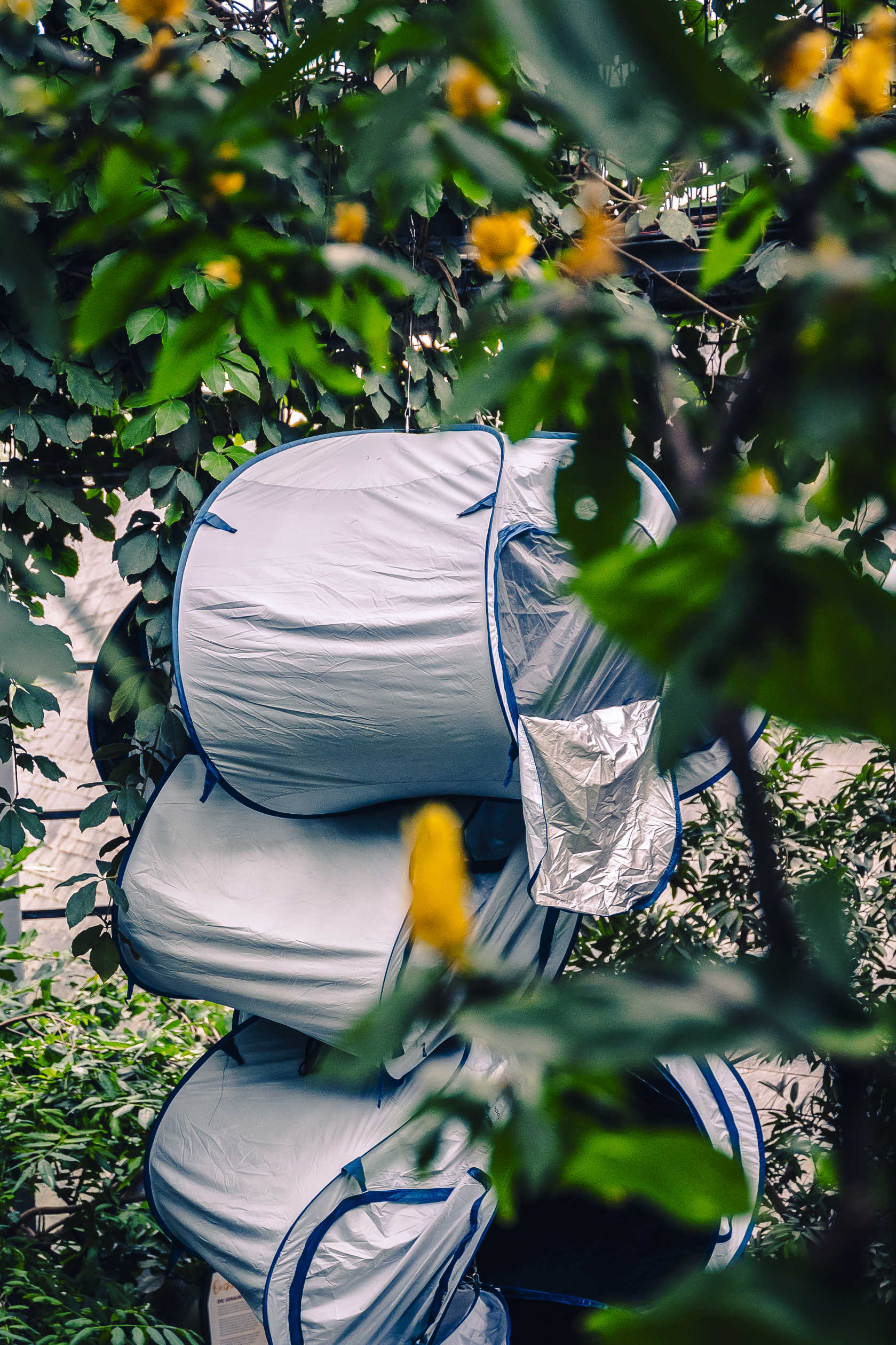
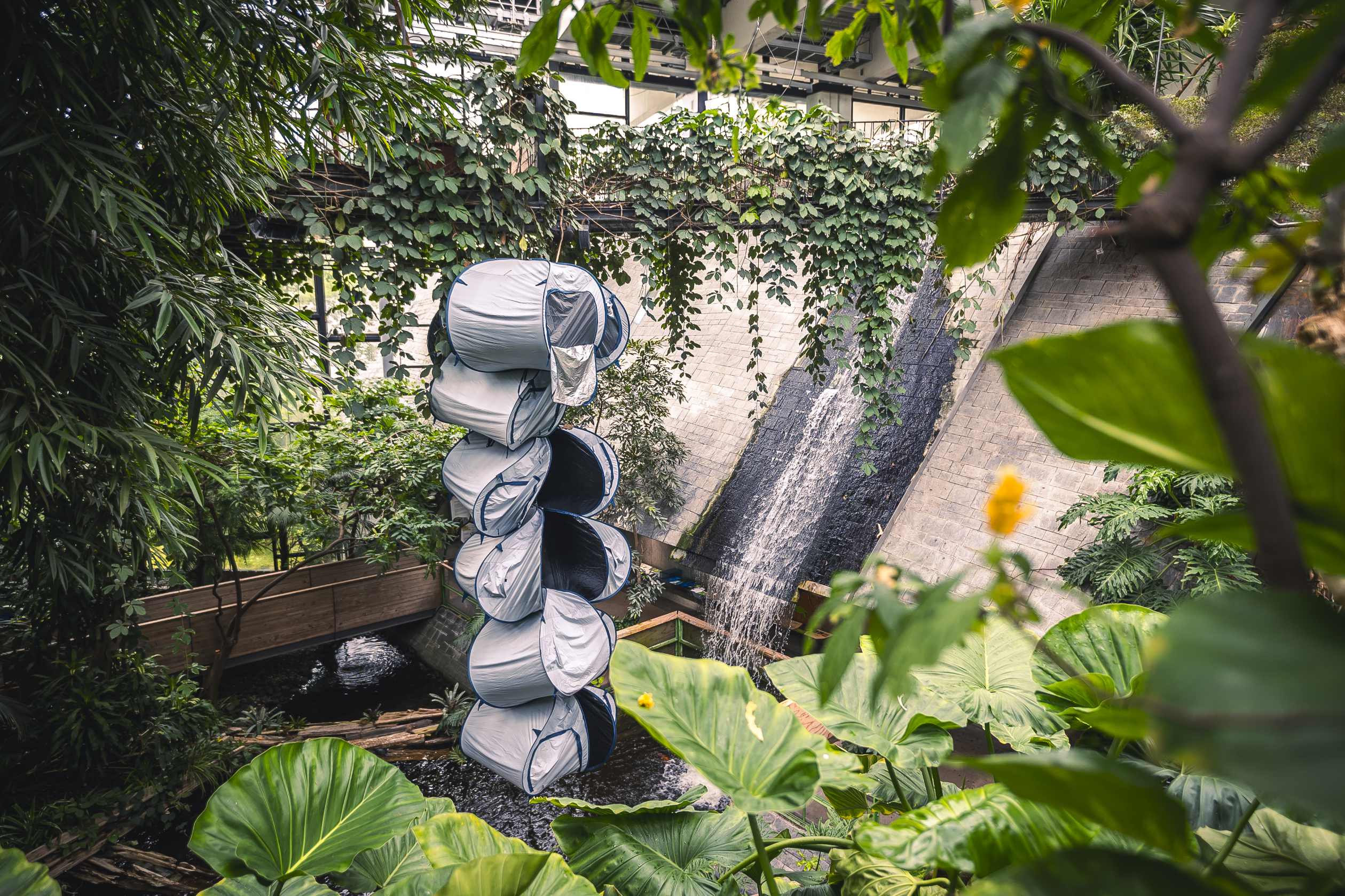
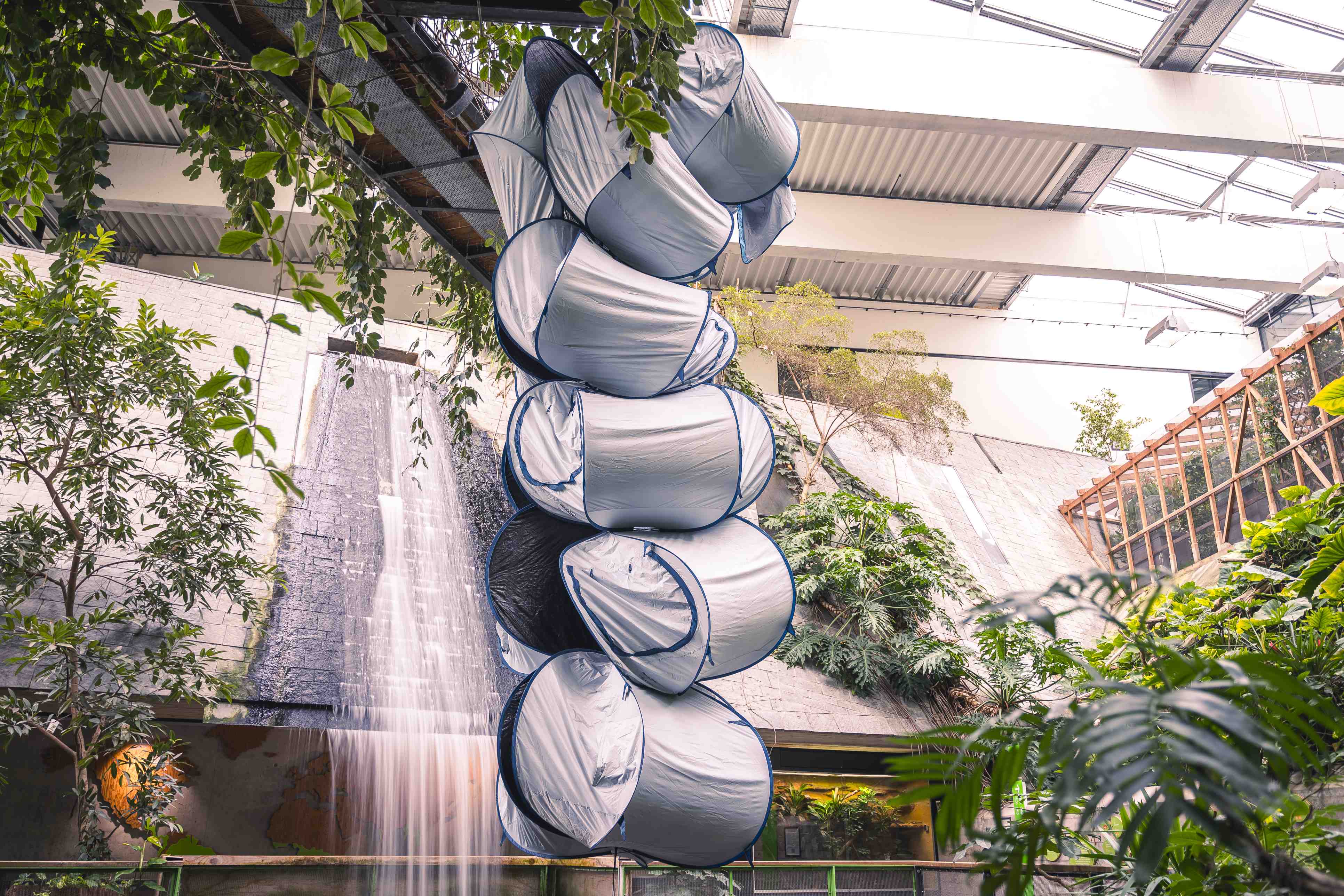
Salewa, Jack Wolfskin, Arc’teryx, Fjäll Raven, Mammut, Elkline, Mufflon, Antworks, BlackFox, BOA, Camelback, Le Chameaux, Chimpanzee, Schwalbe, Red Bull Sport, Old Bear, Tasmanian Tiger, Duckfeet, Falke, CatEye, Crocs, Schildkröt, Spyderco, Zebra, Ask the Fox, Eagle Creek, Eisbär, Kong, Sealskinz and Totem are the current outdoor brands. As a gorbcore trend, the symbols of the brands are also spilling over into urban spaces.
On the one hand, the environment, the milieu, is idyllized by the back-to-nature trend, while on the other hand, the narrative of the foreign is invoked, from which we could separate ourselves with semi-permeable membranes. Yet the ever new technologies and coatings protect us from the cold, wet, light and touch. We still do not see ourselves as part of an environment.
The demand to import rituals from indigenous people as healing techniques to be learned also repeats a questionable attitude, because all religions are cultural creations and thus also mark a distance from the nature that surrounds us. In addition, Émile Durkheim, Carl Strelow and Karl-Heinz Kohl, for example, describe the friendliness of nature in prehistory as a retroactive attribution. „Nature religion, as a designation of the religion of the peoples who were formerly called primitive peoples and in contrast to the „cultural“ religions, can be evaluated positively: as agreement / harmony with ordered nature, from which man has distanced himself through historical development (hence Rousseau: back to nature), or negatively: nature as something that man has to overcome through culture (Hobbes: homo homini lupus est)“ H. Zinser: Grundfragen der Religionswissenschaft, Paderborn: Schöningh 2010, pp. 89-92.
As Levi-Strauss examined in „The Totemic Illusion „, 1962, „attitudes that are incompatible with the demand for discontinuity between nature and man, which is essential to Christian thought“ are thrown out of our world, like an exorcism. It is not only Christian thinking that asserts the separation of man and nature. In Islam, too, people are described as descendants of God and separated from the environment. All religions, with their practices, rituals and teachings, mark human action and the separation from nature as cultural creations. Appealing to a religion given by nature is an illusion. Neither google maps nor nature rituals will show us the way.
Patricia Detmering
From a Wild Weird Clime, 2023-2024, objects, drawings reproduced on plexiglass, Augmented Reality.
Photo credit: Matthias Bednasch

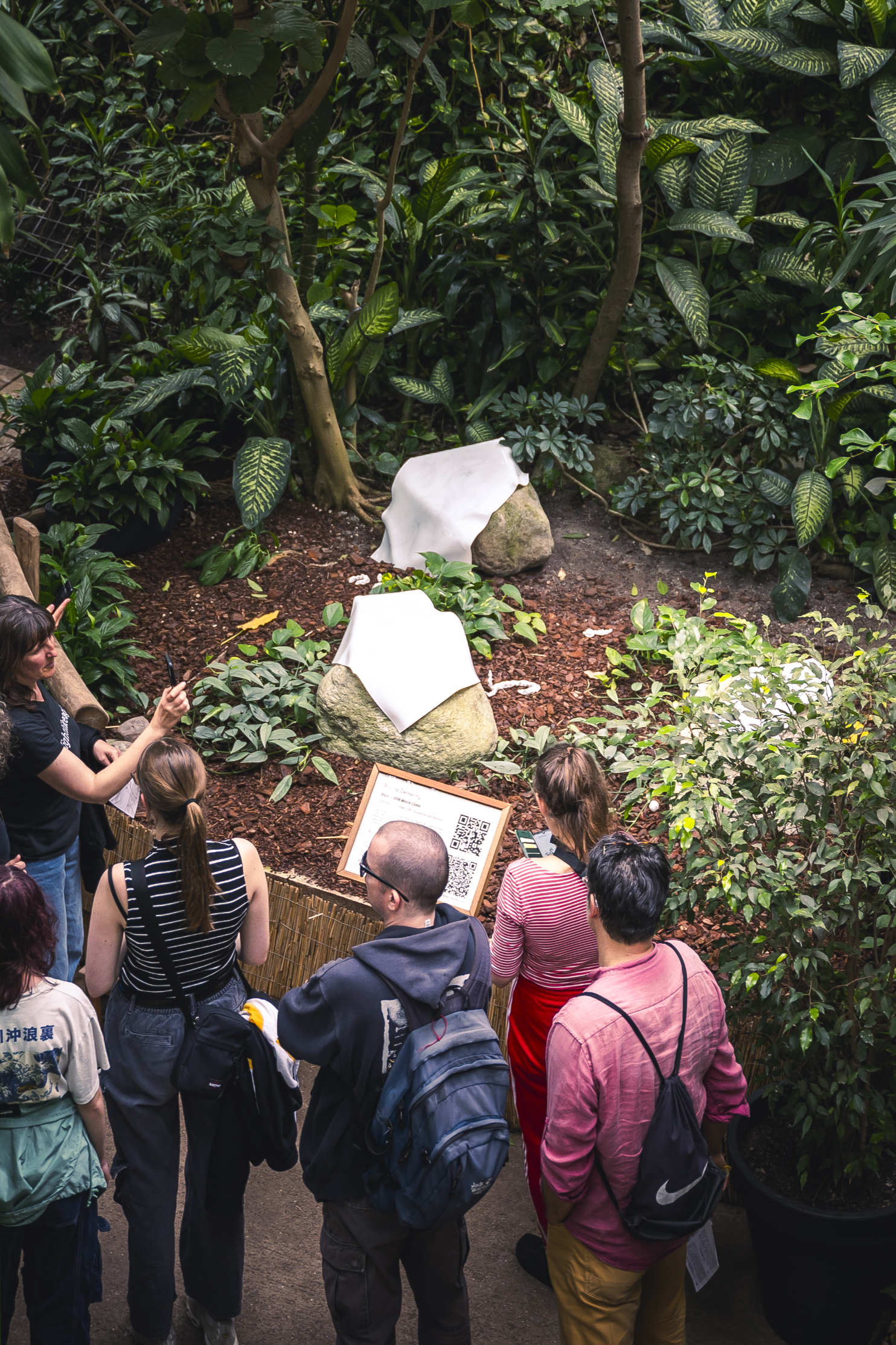
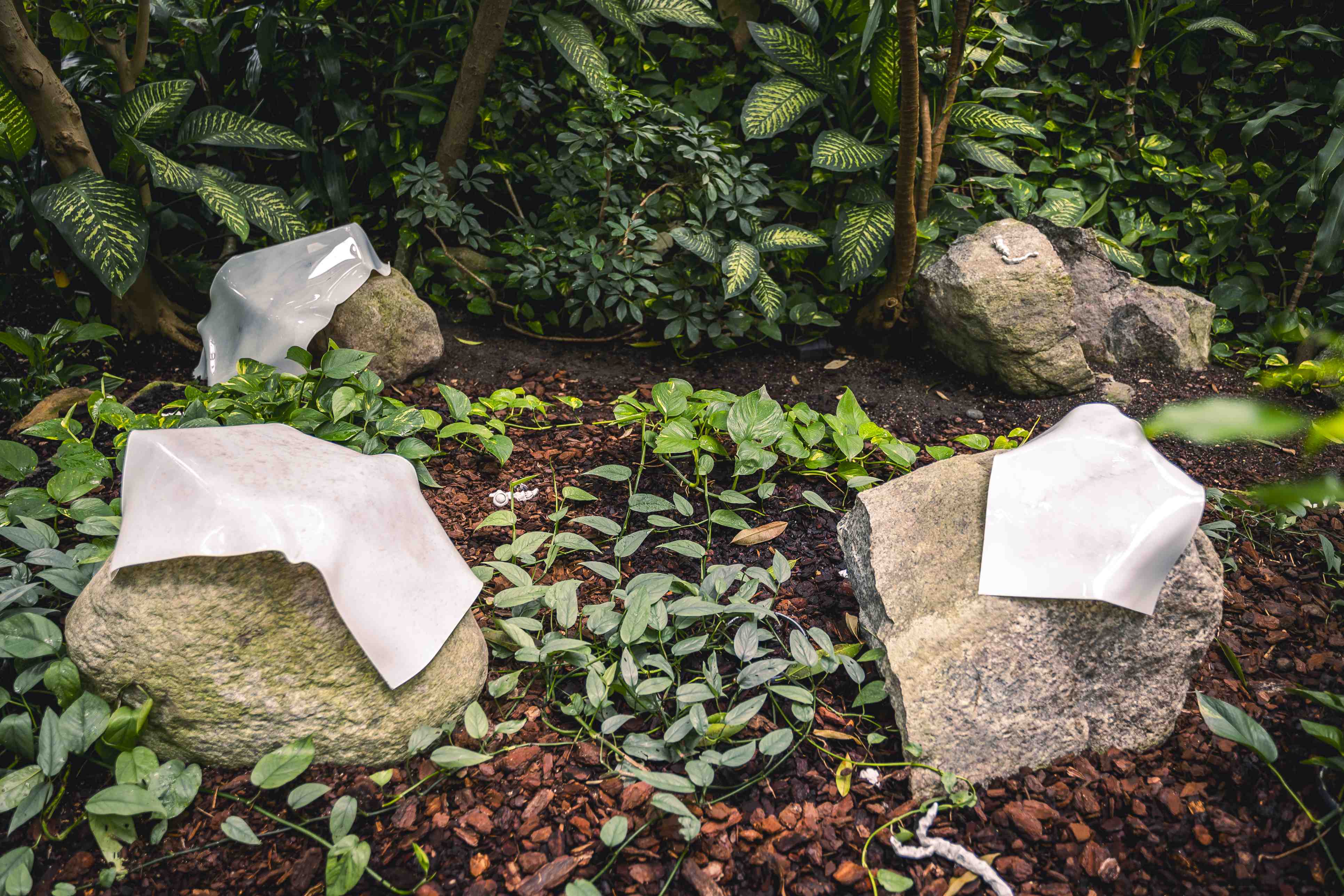
„From a Wild Weird Clime“ tells the story of L̾a̾i̾c̾u̾, the protagonist of a book that the artist Patricia Detmering is continuously writing. It is a contemporary mythological creature of the dream eater species. The creature has the ability to manipulate people’s dopamine and serotonin levels with chemical signals. It tricks them into voluntarily letting the creature into their bedrooms. There it takes control of our dreams by invading our deepest desires and obscuring our assumptions
and perceptions of the world. Its habitat consists of generic environments characterised by, among other things, economic scalability. In these places, one increasingly finds circumstances and aesthetics that have an alienating effect on the human psyche, such as interchangeable architectures with generic materials that are uprooted and devoid of past, present or future – an aesthetic of the total present. In these places, there is an overpopulation of this imaginary species that leads to an entropic state of the global community – a kind of chaos that increasingly defragments the organic connections that link us humans to our environment. The Mhythos L̾a̾i̾c̾u̾ also raises the question of new rituals that are needed to balance our confused dopamine balance and generally live more intellectually honestly, i.e. to strengthen our tolerance for ambiguity and thus escape the claws of L̾a̾i̾c̾u̾.
Swaantje Güntzel
Arctic Vault, 2024LED Laufschrift
Photo credit: Matthias Bednasch
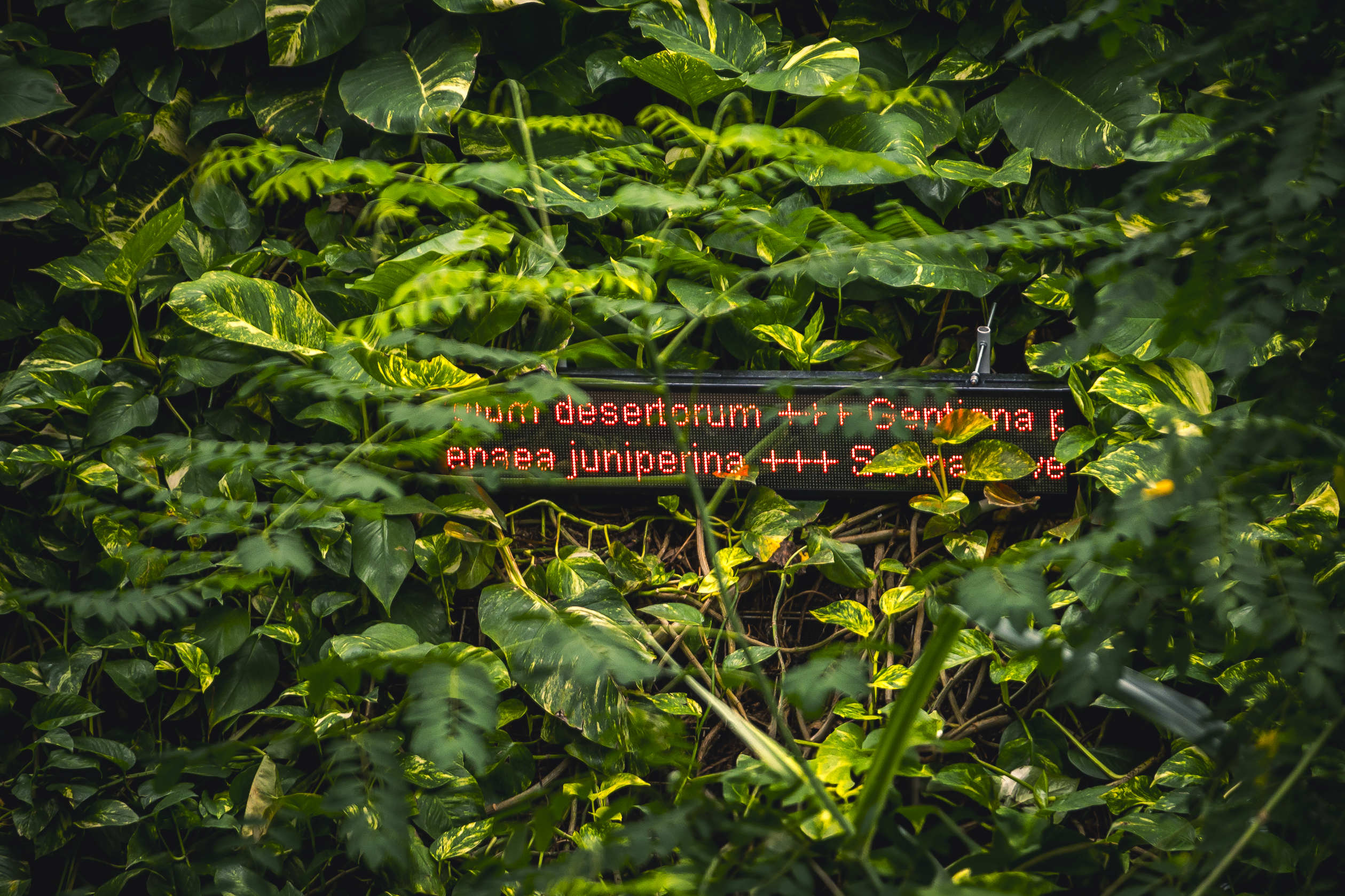
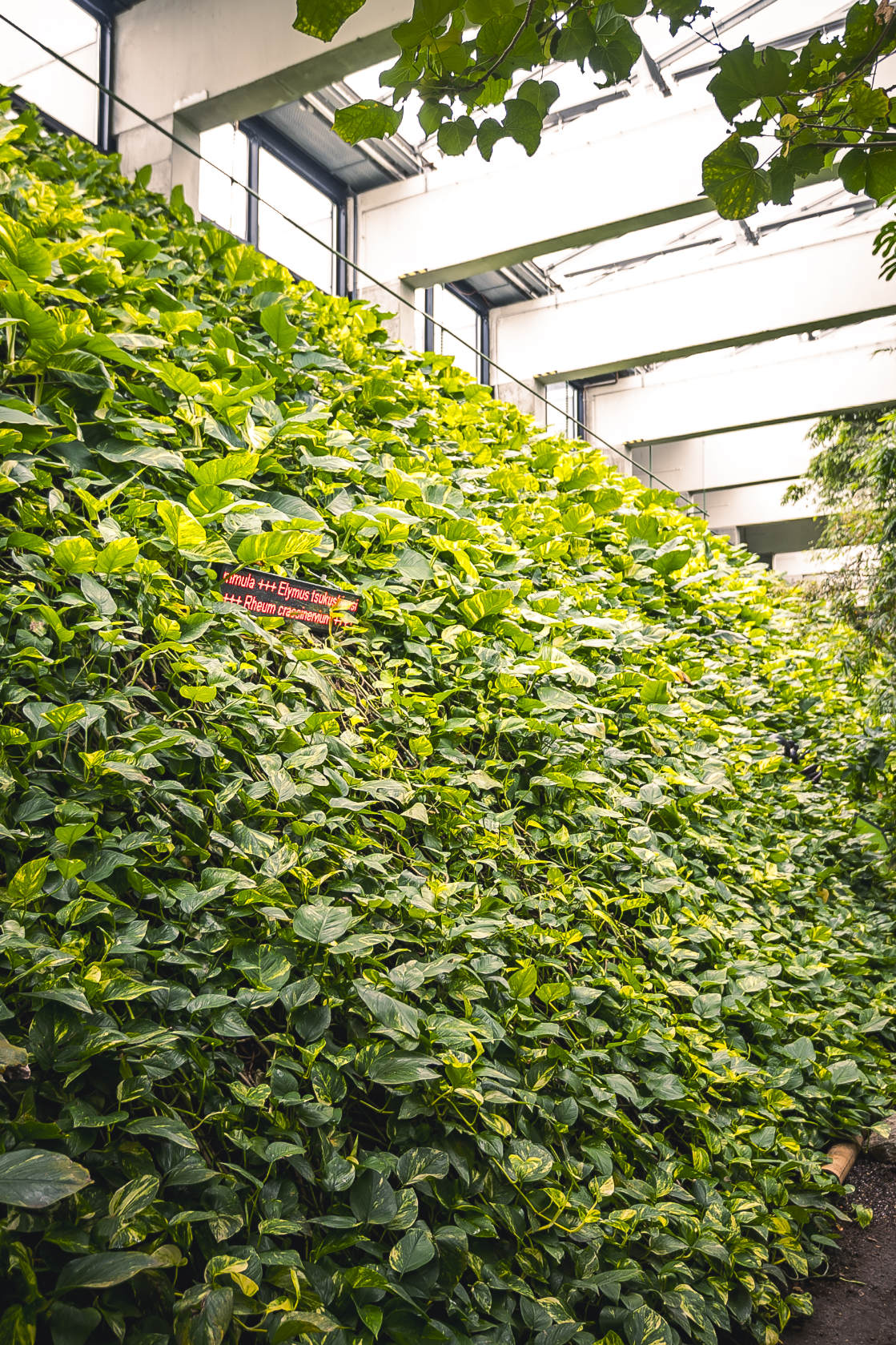
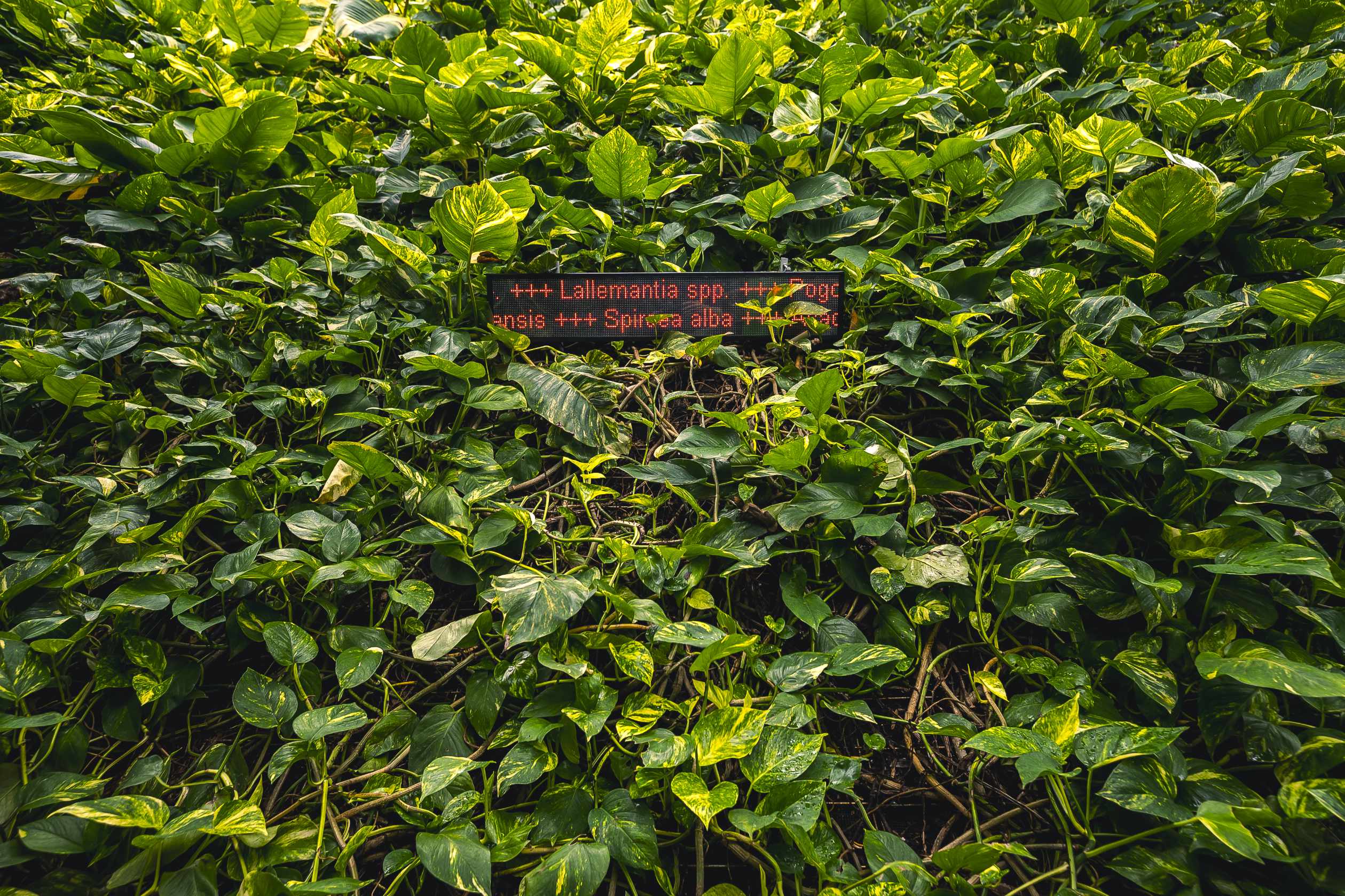
With her intervention in the biosphere, “Arctic Vault”, Swaantje Güntzel invites us to reflect on the fragility of biodiversity. A digital panorama focuses on the valuable seeds stored in the Svalbard Global Seed Vault and reminds us of our responsibility to preserve diversity.
Swaantje Güntzel has been investigating the radical changes that humans are inflicting on nature for over 20 years. In her work, she examines the global challenges caused by anthropogenic climate change, plastic pollution of the oceans and the extinction of species, as well as the resulting psychological consequences for people. Güntzel’s artistic practice stems from a deeply rooted aesthetic position that explores the fundamental opposition between visual pleasure and unsettling global issues. Her work is a disturbing critique of modern life in the 21st century. Swaantje Güntzel is currently an Art Fellow at the Research Institute for Sustainability (RIFS) in Potsdam, where she is working on the reception of the Arctic.
She works conceptually in various disciplines such as performance, installation, photography, sound and video. Much of her work is inspired by scientific research. In collaboration with her colleague and partner Jan Philip Scheibe, she forms the artist couple Scheibe & Güntzel. In 2009, Scheibe & Güntzel initiated the PRESERVED project series, which has since been realised at various locations in Europe. The project illustrates the ways in which the people of a particular region have been nourished by their environment in the past and present. Following on from this project, Güntzel will present a new work entitled „Artic Vault“, in which LED panels will be installed at a specific location in the Potsdam Biosphere. The selected text for these LED panels shows the list of seeds stored in the GLOBAL SEED VAULT in Svalbard, Norway.
The Svalbard Global Seed Vault is a secure backup facility for the world’s plant diversity on the Norwegian island of Spitsbergen in the remote Arctic Svalbard archipelago. In the Seed Vault, duplicates of seeds stored in gene banks around the world are stored for the long term. This safeguards the global food supply against the loss of seeds in gene banks due to mismanagement, accidents, equipment failure, funding cuts, war, sabotage, disease and natural disasters. (Wikipedia)
Jörn Quedenau (RIFS Potsdam), Achim Maas (RIFS Potsdam), and the Svalbard Global Seed Vault helped realize the work „Artic Vault“.
Udo Koloska
NACHLEBEN, 2024 Licht- und Soundinstallation Audiokomposition (3:37min), Fichtenlatten, Lochband, Lavamulch, E14 LED-Lampen, Kabel, Elektronik
Photo credit: Matthias Bednasch
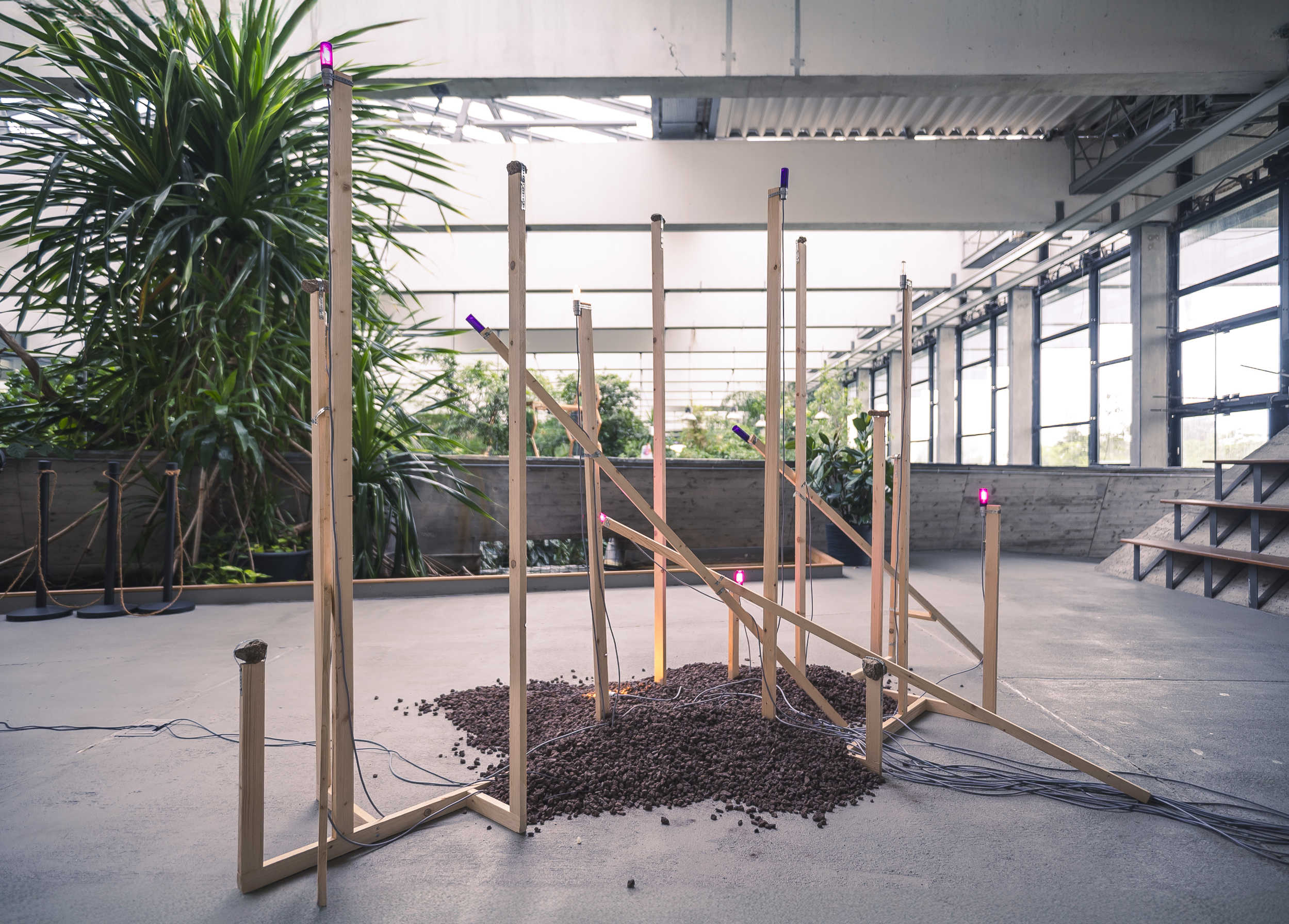
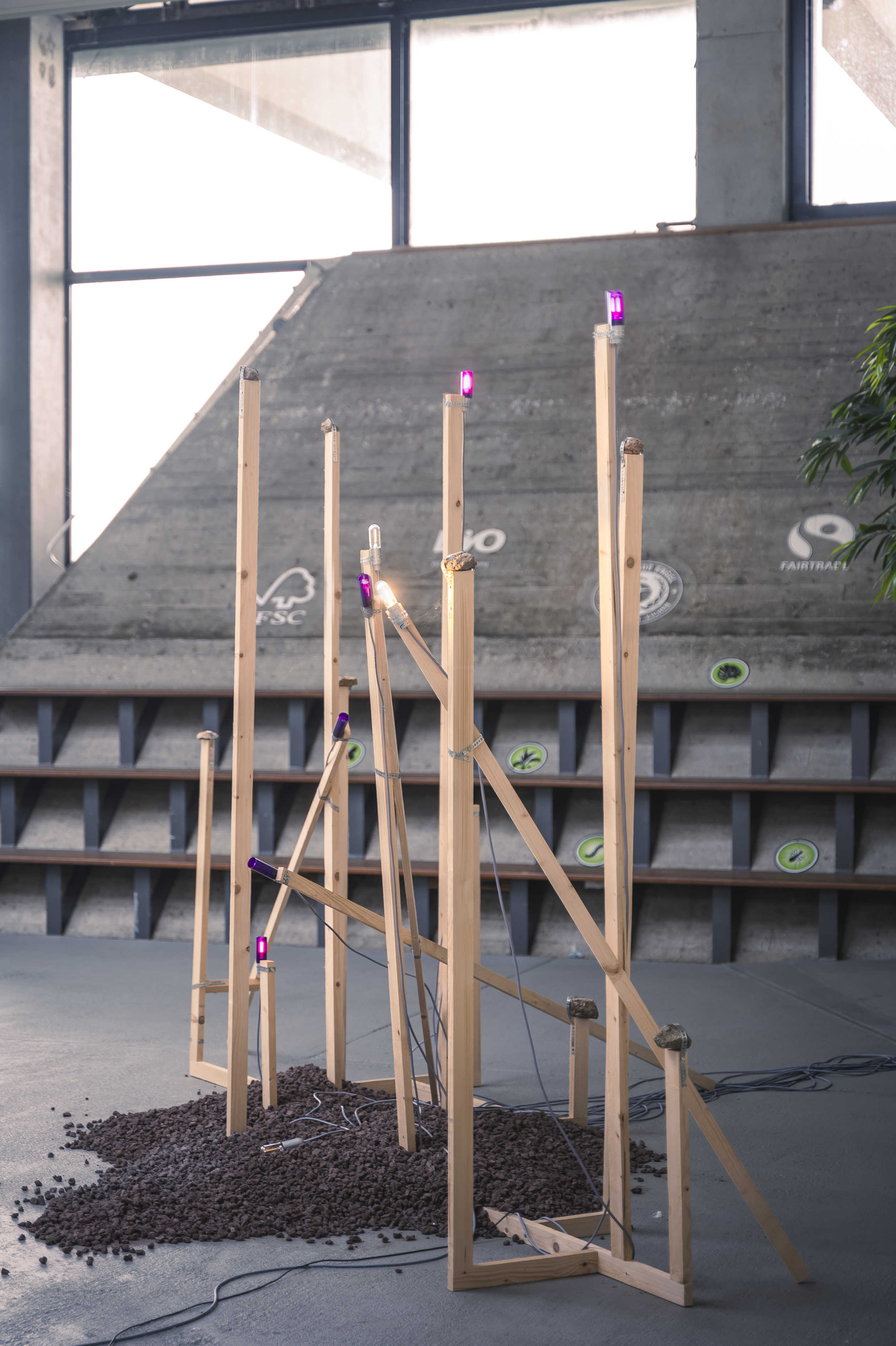
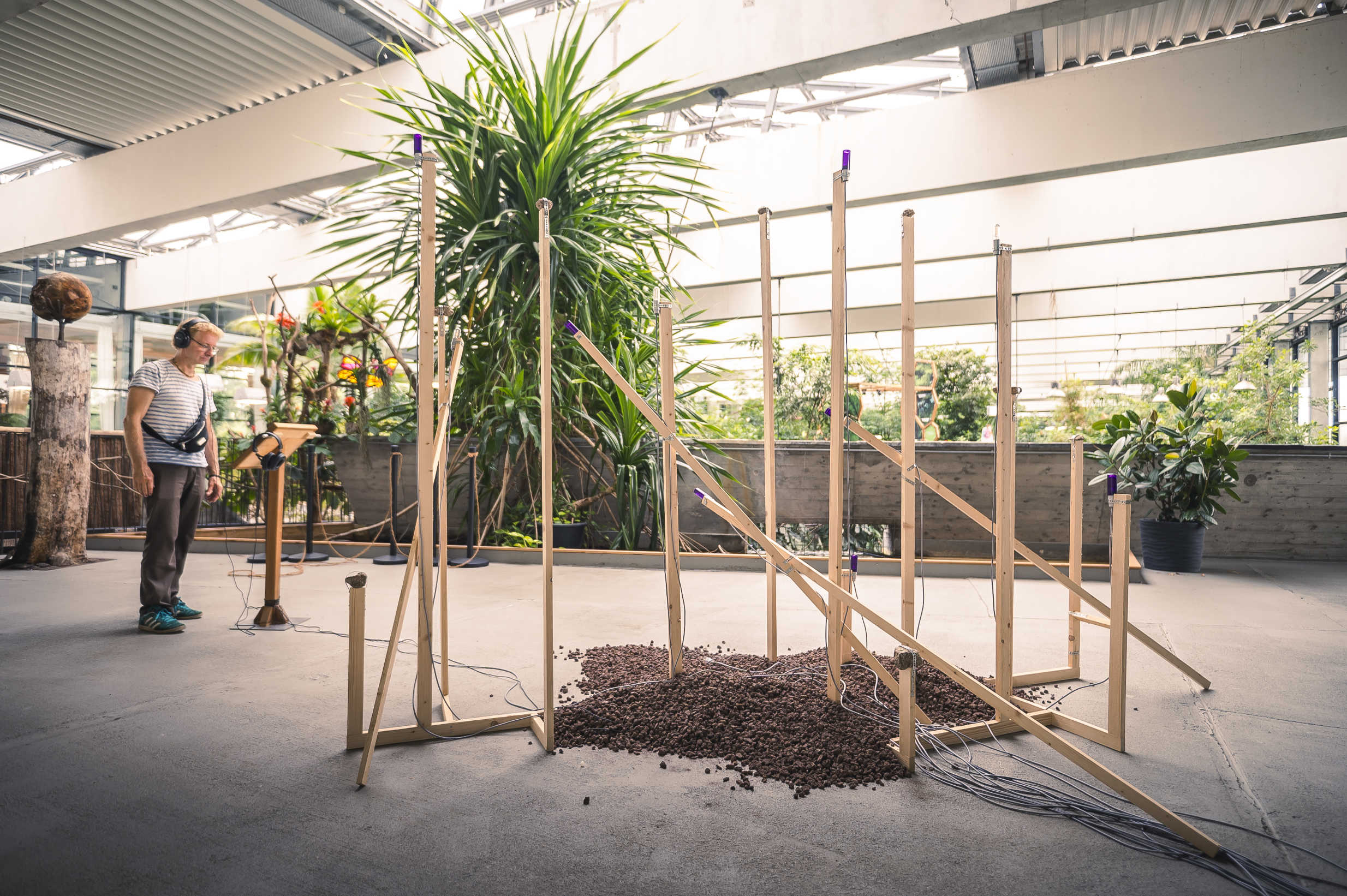
The reference point of the work is the large-scale loss of forests in the Harz Mountains and the associated transformation of the local ecosystem. The sound recordings were made in the Upper Harz near Schierke in 2023/24.
Around four out of five spruce trees in the Harz National Park have died due to drought, monoculture and bark beetle infestation. Although there have been extensive attempts and successes in reforestation, there is still no trend reversal in sight. In place of the dead spruce forests, new vegetation is emerging from the roots, seeds, materials and intertwinings on site.
Käthe Wenzel
Leviathan, 2021
silk, linen, aluminium rods, copper tubing, mixed animal bones
80x95x490 cm
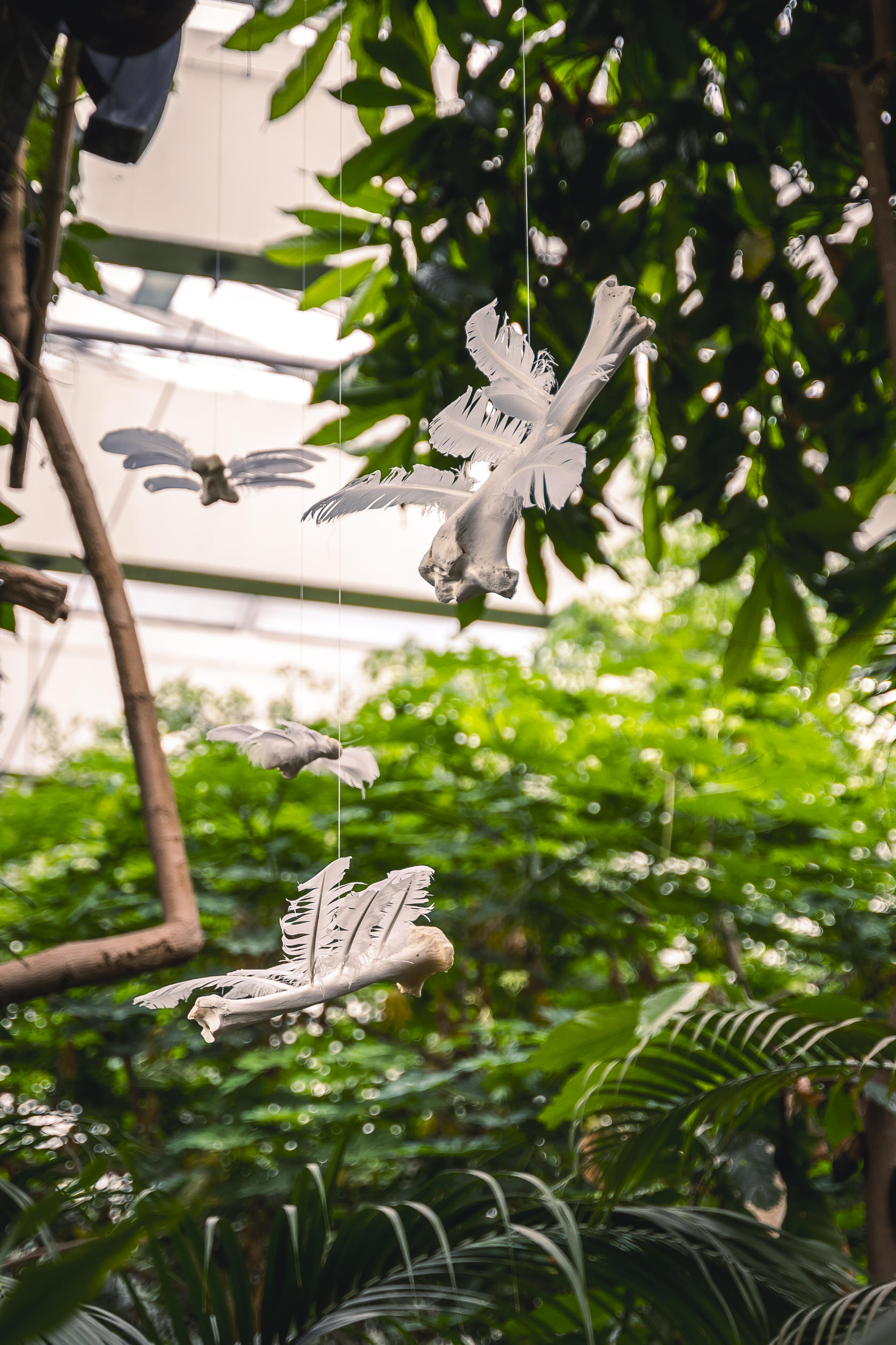
Bone Birds
Bones, feathers, suspension
appr. 35 pieces
dimensions between 10x15x25 und 15x35x35 cm
Photo credit: Matthias Bednasch
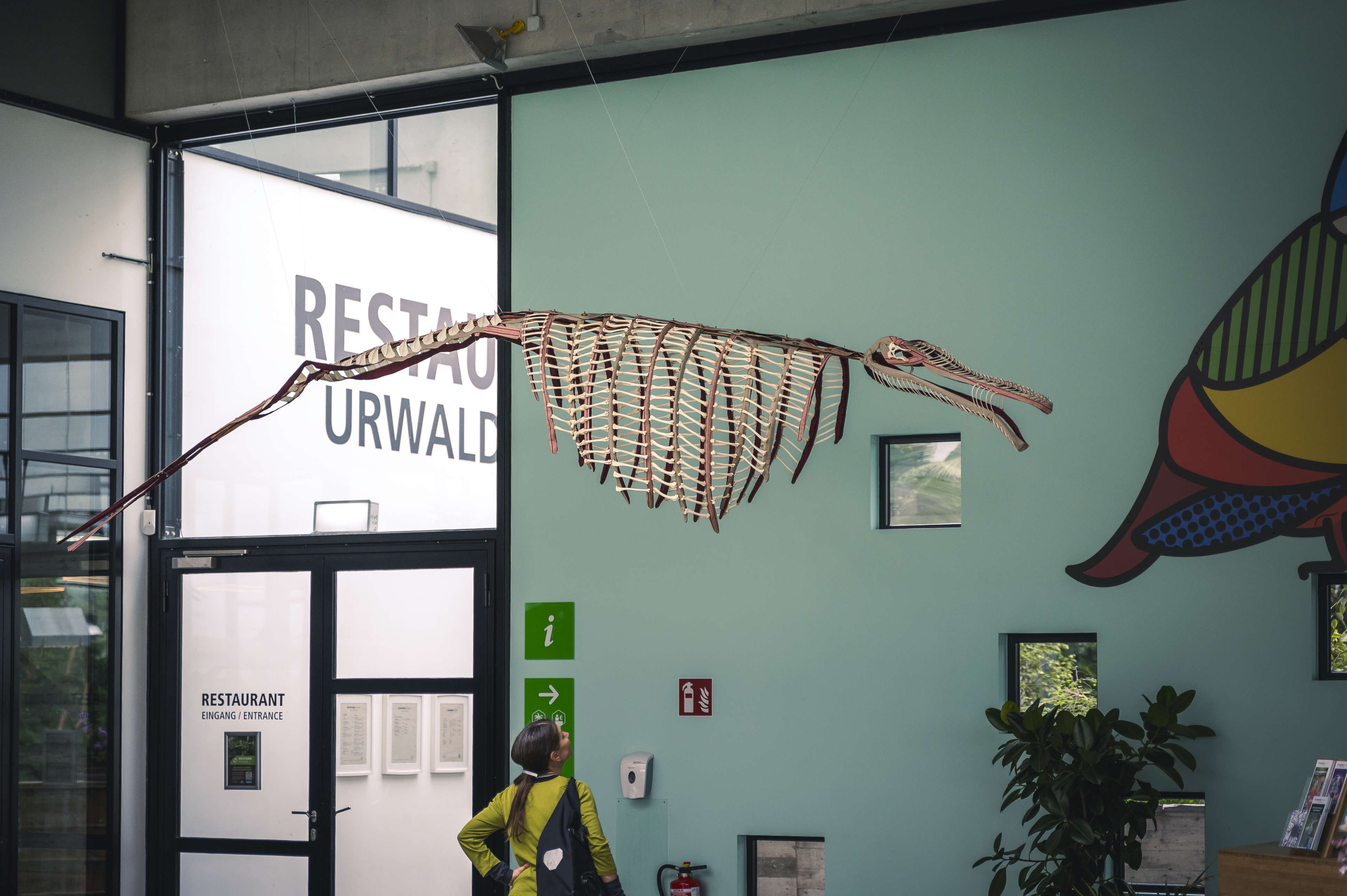

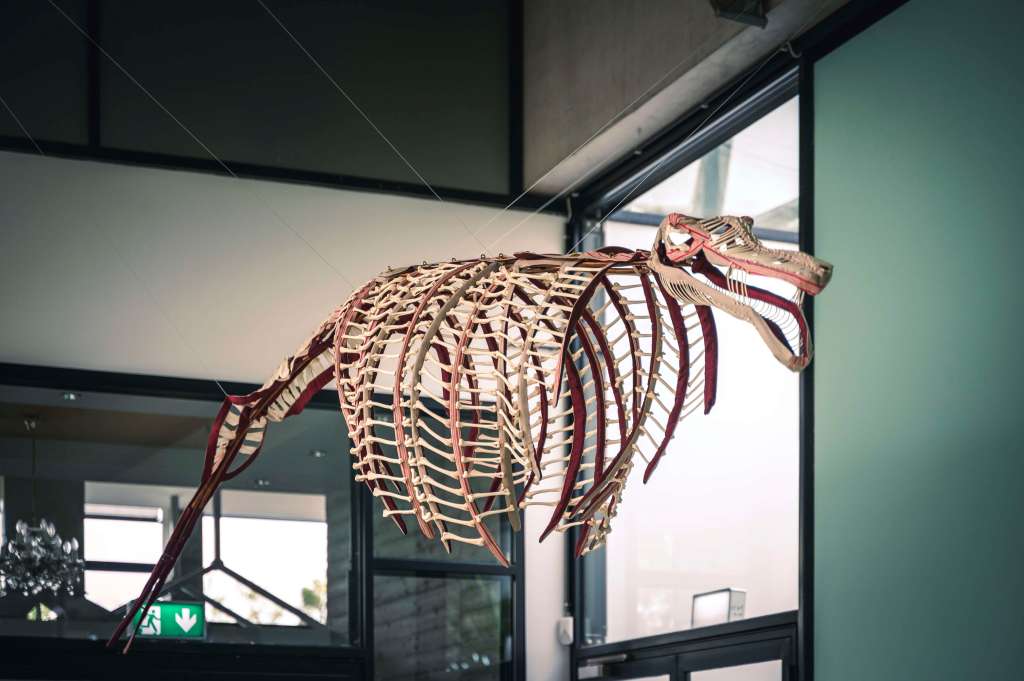
Käthe Wenzel’s sculptures are visceral commentaries on consumer behavior and the way we deal with the non-human world. Inspired by Thomas Hobbes‘ Leviathan (1651) and the term Capitalocene coined by Jason W. Moore and Donna Haraway, Wenzel’s Leviathan takes a close look at concepts of nature, longing for nature and consumption.
Composed of animal bones that come from restaurant bins and roadkill, Wenzel’s Leviathan assumes the shape of a whale skeleton – a mammal which has been aggressively exploited and hunted to the brink of extinction, and which has been a focal point in the fight for the survival of the species even before the extent of the ongoing loss of species had become apparent.
At the same time, the bone creature takes the name of a biblical sea monster, a mythological creature created to punish humanity. Held together by strips of fabric and with two head holes, the skeletal creature can theoretically be worn and revived like a costume – though so far, the human longing for harmony with other species hasn’t been strong enough to stop the ongoing extinction.
Hobbes‘ Leviathan discusses the power of masses and collectives, and the constant of human aggression – problems that in the face of the 6th extinction of species, climate change, and the alienation of the human world from the non-human world, are everywhere, their social, economic and ecological effects only just beginning to show.
Wenzel’s bone sculptures address the daily mass consumption of living beings and the theft of animal bodies. They arose from research into historical corset techniques that aimed to ideally reshape natural bodies, similar to sculptural tools. In combination with modern fashion technologies, they evolve into exo-skeletons, half organic and half mechanical apocalyptic outfit.
The BoneBirds are created as spin-offs and runaways from the bone workshop into the open air.
Cécile Wesolowski
Time Waterfall, 2024Light, water & sound installation
Photo credit: Matthias Bednasch
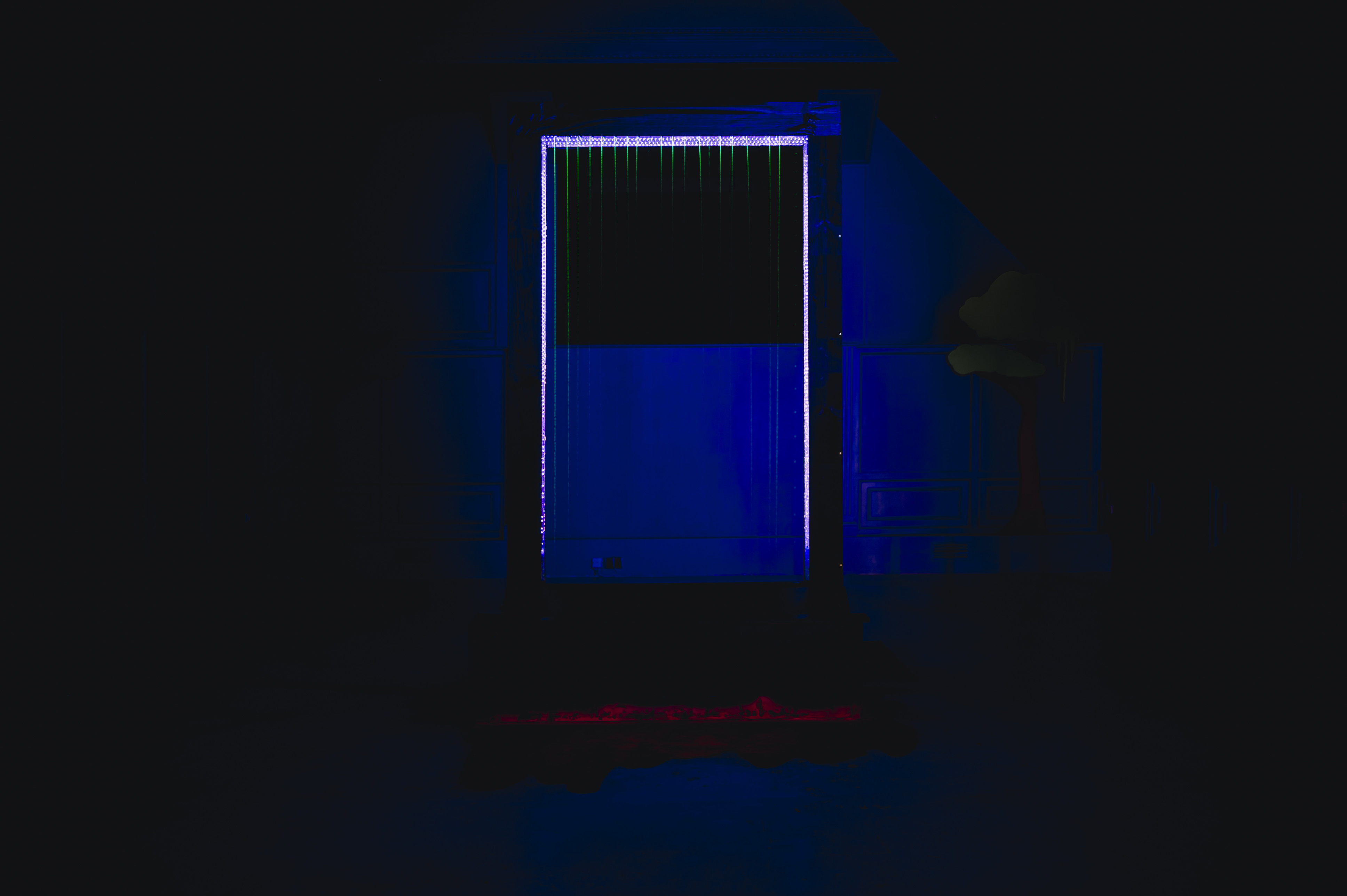
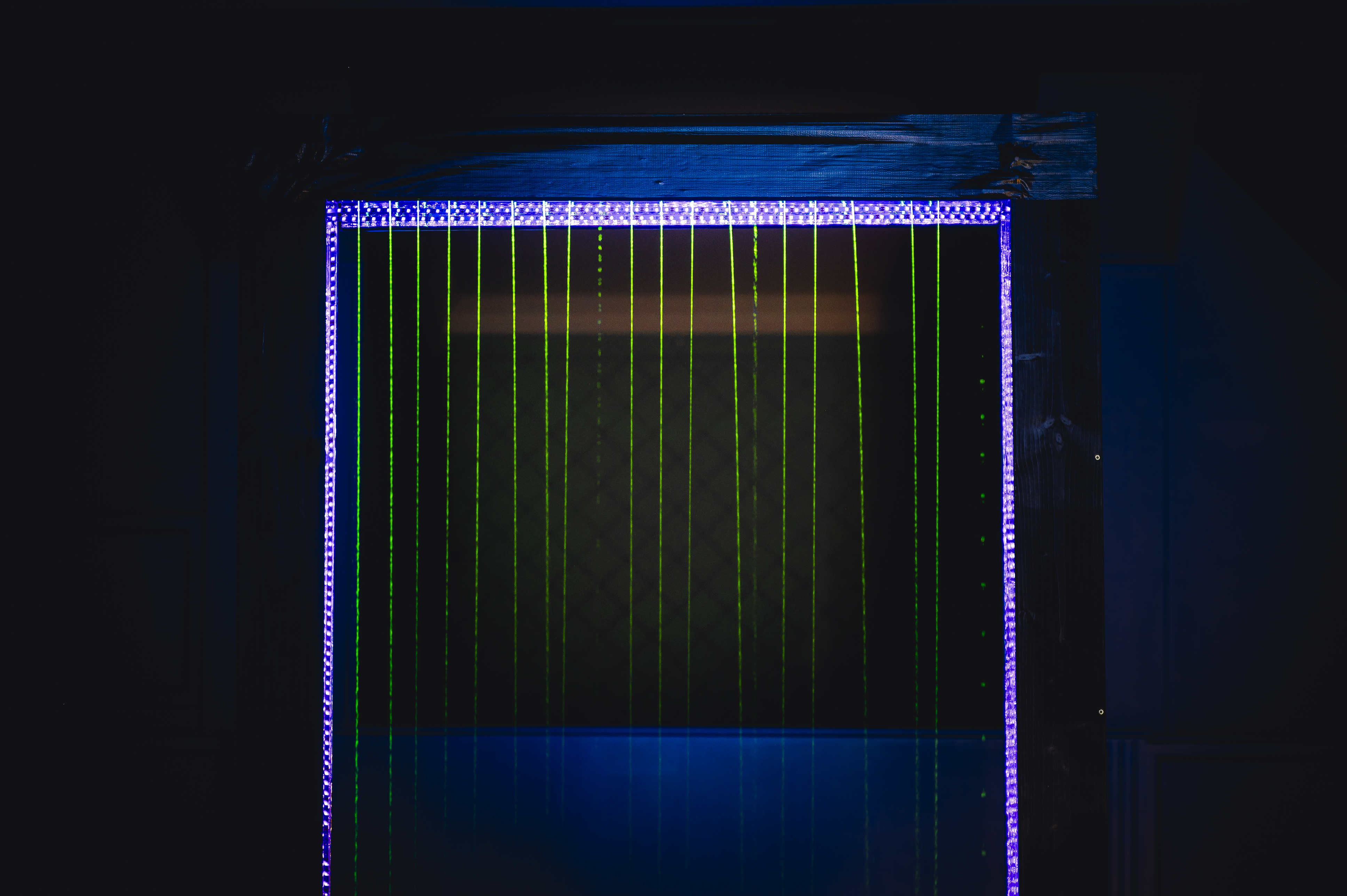
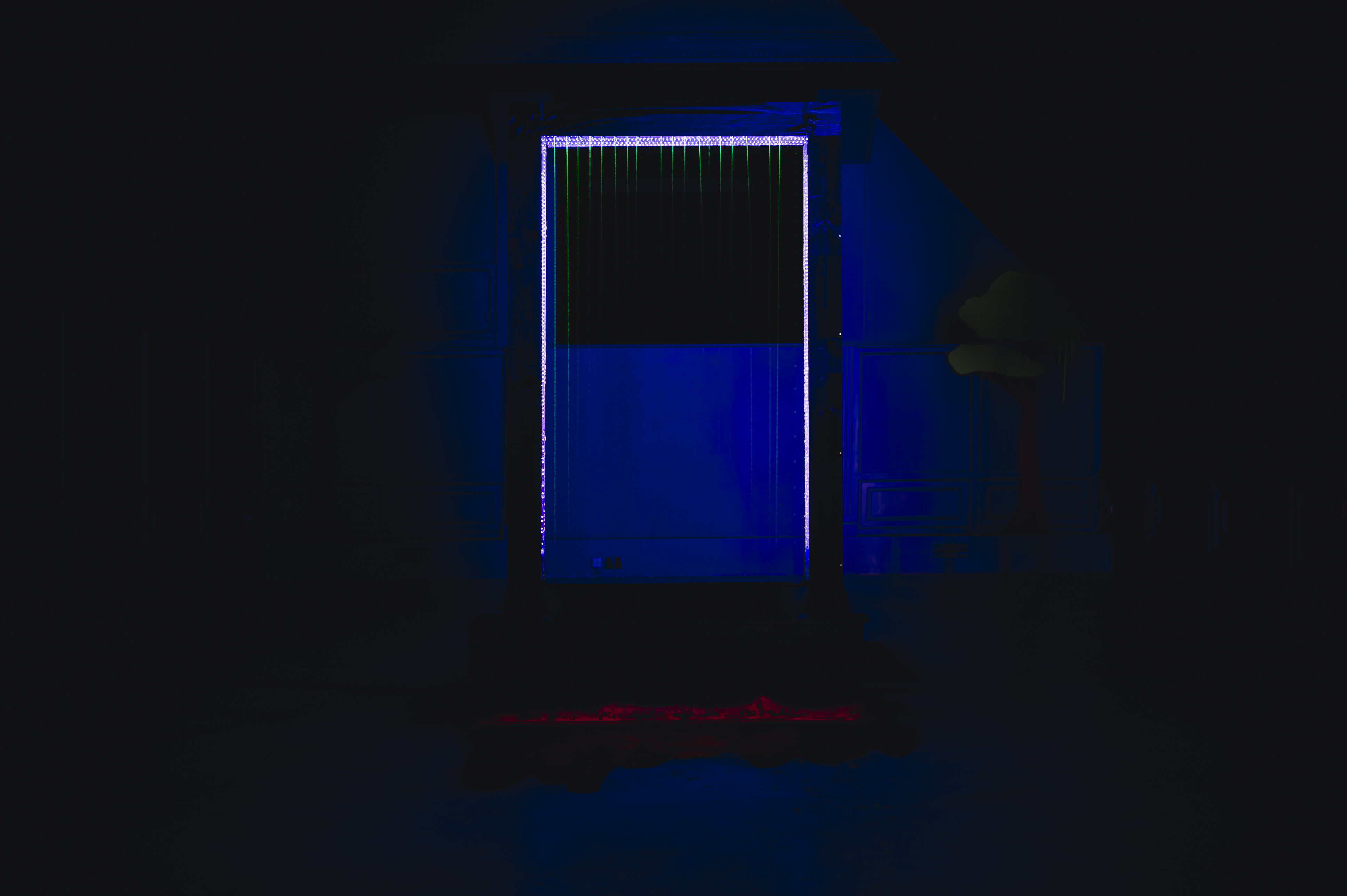
Time waterfall is a light, water and sound installation made with a stroboscopic light, a water pump and a subwoofer. It simulates a waterfall in slow motion where the audience is able to see the water drops. It is a meditative installation, the public can sit down and take the time to contemplate this virtual waterfall as in slow motion, taking the time to understand the value of water and its importance.
45 cycles per second in order to create a ’stream‘ of water droplets.
STROBOSCOPIC TECHNIQUE OPTICAL ILLUSIONS
Harold „Doc“ Edgerton, an American electrical engineer and photographer was noted for creating high-speed photography techniques. He developed and improved strobes and used them to freeze objects in motion so that they could be captured on film by a camera.
The ‚Piddler‘ machine he created more than 50 years ago uses a stroboscopic technique to form optical illusions of levitating water droplets, slowing the downward flow of water as well as reversing the flow of water to move upwards to defy the laws of gravity.
Deciphering ‘Echoes of the Future: Artistic Interventions’, how artists use narratives & aesthetic practices to explore the environmental crisis
Text by Tuçe Erel, Jenny Alten & Udo Koloska
 Tuçe Erel